Solar Is Growing Faster Than It Has in Years
The renewable energy industry is experiencing an extraordinary moment. Solar power is expanding at its fastest pace in more than a decade, with projects being built across the globe to meet rapidly growing electricity demand.
But at the same time, global emissions are still increasing.
This paradox highlights one of the most important realities of the energy transition: the world is not simply replacing old energy systems with new ones. Instead, it is expanding the entire energy infrastructure to meet rising demand.
The Real Driver: Electricity Demand
Electricity consumption is growing at a historic rate. Several major trends are pushing demand higher:
-
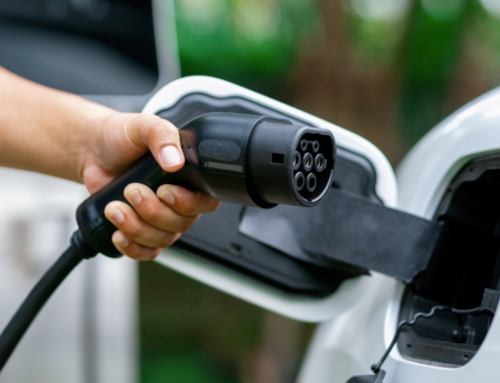
Electric vehicles
-
Electrified heating systems
-
Industrial electrification
-
Population growth
-
Artificial intelligence infrastructure
Among these drivers, AI has emerged as one of the most surprising and powerful forces shaping energy demand.
The Rise of AI Data Centers
Artificial intelligence requires enormous computing power. Training models and running AI applications involves thousands of graphics processing units (GPUs) operating simultaneously in massive data centers.
These facilities operate around the clock and require consistent, reliable electricity.
As a result, tech companies are rapidly securing long-term renewable energy contracts to power their infrastructure.
Solar power purchase agreements are becoming one of the most attractive tools for companies seeking predictable energy pricing over 10–20 year periods.
Solar Becomes Infrastructure
This demand is changing the way solar projects are structured.
Historically, renewable energy contracts were often driven by sustainability commitments. Today, they are increasingly driven by operational necessity.
Technology companies building AI infrastructure need reliable electricity supply. Solar projects can be deployed relatively quickly compared to other forms of generation, making them an attractive solution.
The Grid Under Pressure
However, the rapid growth of electricity demand is also exposing weaknesses in existing grid infrastructure.
Transmission lines take years to build. Power plants take years to permit and construct. Meanwhile, new data centers are appearing at extraordinary speed.
This mismatch between demand growth and infrastructure expansion is creating bottlenecks throughout the energy system.
The Role of Distributed Solar
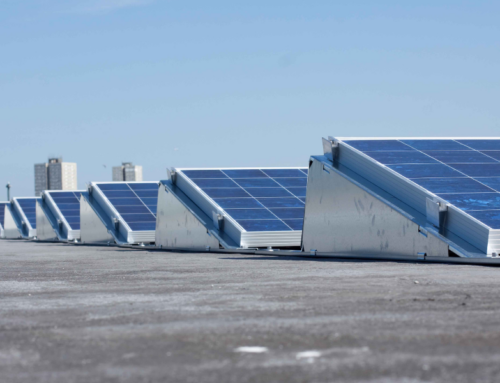
Distributed solar systems — installed on homes and businesses — play an important role in this evolving ecosystem.
Instead of relying entirely on centralized power plants, distributed generation spreads energy production across thousands of rooftops.
This approach can reduce strain on transmission networks and improve local grid resilience.
The Solar Industry’s Roller Coaster
The solar industry continues to evolve rapidly as policy, technology, and energy markets shift.
Electric vehicles, AI infrastructure, and electrified buildings are all contributing to a global transformation of electricity demand.
And as these changes accelerate, solar energy remains at the center of one of the largest infrastructure transitions in modern history.
Sponsored by Sun Energy Today
This episode is sponsored by Sun Energy Today, a commercial solar and storage developer focused on MW-scale infrastructure and long-term energy resilience.
🌐 https://sunenergytoday.com/
💼 https://www.linkedin.com/in/atzael-herrera/
Listen to the Full Episode
🎧 Spotify: https://open.spotify.com/show/28LLOtNEQj8ZoCZJqVOa7o
🎧 Apple Podcasts: https://podcasts.apple.com/us/podcast/the-solar-coaster-podcast/id1832579656
🎧 Amazon Music: https://music.amazon.com/podcasts/342b84c9-ccb9-4cdb-99cc-ed6254503bfa/the-solar-coaster-podcast
🎧 iHeart Radio: https://iheart.com/podcast/292376116/
📺 YouTube: https://www.youtube.com/@solarcoasterbook
⚠️ AI Transparency Notice: This episode uses AI-generated voice technology based on the real voices of Anna Covert and Alex Herrera. Both individuals have provided full knowledge and consent for their voices and likenesses to be used in this AI-produced episode. The insights shared reflect their real-world experience and professional viewpoints. This episode is clearly labeled as AI-assisted and is not intended to mislead viewers regarding identity or authorship.
Full Podcast Transcript:
In this episode of The Solar Coaster, Anna Covert and Alex Herrera, owner of Sun Energy Today, break down how AI data centers are changing electricity demand, why solar is becoming essential infrastructure, and what these shifts mean for the future of the solar industry.
Solar Coaster Podcast Transcript: AI Data Centers, Energy Demand, and the Future of Solar
Host: Anna Covert
Co-Host: Alex Herrera, Owner of Sun Energy Today
In this episode of The Solar Coaster, Anna Covert and Alex Herrera discuss how AI data centers are reshaping electricity demand, why solar power purchase agreements are evolving, and what this means for the future of renewable energy, infrastructure, and grid reliability.
Episode Transcript
Anna Covert: Hello, my name is Anna Covert and this is the Solar Coaster — the wild ride through the solar industry told by the people who are living it every day.
Anna Covert: And today we’re diving into two stories that really caught my attention this week.
Anna Covert: But before we get into that, I want to introduce my co-host.
Anna Covert: Alex Herrera is the owner of Sun Energy Today, a solar company based in Arizona. Alex works on the front lines of the energy transition — helping homeowners and businesses navigate the constantly shifting world of energy policy, pricing, and technology.
Anna Covert: Alex, welcome back.
Alex Herrera: Thanks Anna. Always good to be here. And I love when we get to talk about stories like these because the solar, AI, and energy industries are becoming deeply connected.
Alex Herrera: Everything from electricity demand to infrastructure is being reshaped by what’s happening with artificial intelligence.
Anna Covert: Exactly. The two articles we’re looking at today really highlight that shift.
Anna Covert: One talks about how AI data centers are rewriting the solar PPA playbook, and the other covers solar’s fastest growth in a decade while emissions are still rising globally.
Anna Covert: So Alex, from your perspective working in the field every day — what stood out to you?
Alex Herrera: Honestly, the scale of what’s happening right now.
Alex Herrera: AI data centers are becoming massive electricity consumers. We’re talking about facilities that run 24 hours a day, filled with GPUs and computing infrastructure that require enormous amounts of power.
Alex Herrera: Training large AI models, running cloud platforms, and supporting applications like ChatGPT requires huge energy loads.
Anna Covert: Right. And that’s why we’re seeing companies like Google, Amazon, and Microsoft racing to secure renewable energy.
Alex Herrera: Exactly.
Alex Herrera: And here’s the interesting part — these companies don’t just want renewable energy because it’s environmentally responsible.
Alex Herrera: They want it because renewables can offer long-term price stability.
Alex Herrera: Solar and wind have predictable pricing over time. That’s a huge advantage compared to fossil fuels where costs can fluctuate.
Anna Covert: That’s a big point.
Anna Covert: When electricity becomes central to the economy, price certainty matters.
Alex Herrera: Exactly. And solar offers that.
Alex Herrera: Once the system is built, the energy cost is largely fixed. That makes it attractive for companies that want to lock in energy costs for 10, 15, or even 20 years.
Anna Covert: But the interesting twist here is how quickly demand is accelerating.
Anna Covert: Utilities and grid operators weren’t necessarily planning for this level of growth.
Alex Herrera: No, they weren’t.
Alex Herrera: And that’s creating a bottleneck.
Alex Herrera: Transmission lines take years to build. Power plants take years to develop. But data centers can be built much faster.
Alex Herrera: So the grid is now trying to catch up to a wave of electricity demand that’s arriving very quickly.
Anna Covert: Which brings up a huge issue — infrastructure.
Alex Herrera: Exactly.
Alex Herrera: Transmission projects can take years or even decades because of permitting, environmental review, and regulatory processes.
Alex Herrera: Meanwhile, companies building data centers want power immediately.
Alex Herrera: So the pressure on the grid is increasing rapidly.
Anna Covert: And that’s one of the reasons solar is growing so quickly.
Anna Covert: Solar projects can be deployed much faster than many other forms of generation.
Alex Herrera: Yes.
Alex Herrera: Solar projects can be built in months rather than years.
Alex Herrera: That flexibility makes solar a natural solution when demand is growing quickly.
Anna Covert: Another trend we’re seeing is a shift toward distributed energy.
Anna Covert: Instead of all electricity coming from centralized power plants, we’re seeing more generation closer to where power is consumed.
Alex Herrera: Exactly.
Alex Herrera: Solar on rooftops, solar on commercial buildings, battery systems, and local energy infrastructure are all becoming more important.
Alex Herrera: And that actually helps the grid.
Alex Herrera: Because when power is generated locally, it reduces strain on transmission systems.
Anna Covert: When you zoom out, it feels like we’re witnessing a major transformation.
Anna Covert: Electricity is becoming the backbone of the modern economy.
Alex Herrera: It really is.
Alex Herrera: Between AI, electrification of transportation, and new technologies, electricity demand is growing again in ways we haven’t seen for decades.
Alex Herrera: And solar is right in the middle of that transition.
Anna Covert: And from a solar company perspective, what does that mean for the industry?
Alex Herrera: It means opportunity.
Alex Herrera: The conversation with customers is changing.
Alex Herrera: Ten years ago solar was mainly about saving money.
Alex Herrera: Now people are talking about resilience, energy independence, and long-term energy security.
Anna Covert: Which makes sense.
Anna Covert: Because electricity is becoming central to everything we do.
Alex Herrera: Exactly.
Alex Herrera: This is one of the biggest industrial transformations in modern history.
Alex Herrera: And solar is playing a huge role in it.
Anna Covert: So in many ways, the solar industry is entering a new phase.
Anna Covert: It’s no longer just an alternative energy source — it’s becoming essential infrastructure.
Alex Herrera: That’s right.
Alex Herrera: And watching how quickly things are changing is fascinating.
Anna Covert: Absolutely.
Anna Covert: Alright everyone, that’s it for this episode of the Solar Coaster.
Anna Covert: If you enjoyed this conversation, make sure to subscribe so you don’t miss future episodes where we explore the biggest trends shaping the solar industry.
Anna Covert: Thanks for listening.