How Smarter State Energy Rules Could Lower Power Costs and Accelerate Solar
Electricity demand is rising.
Artificial intelligence, new data centers, advanced manufacturing, electric vehicles, and building electrification are placing new pressure on power systems across the United States.
For homeowners and businesses, the central concern is straightforward: Will meeting that demand require years of expensive construction and dramatically higher utility bills?
Not necessarily.
Solar energy, battery storage, flexible demand, and modern grid technologies can help meet new load more quickly and with less fuel-price exposure. But realizing those benefits requires more than installing equipment.
It requires better rules.
At Sun Energy Today, we view solar as part of a complete energy strategy. Equipment quality matters, but so do utility planning, interconnection, permitting, rate structures, grid capacity, and long-term policy.
Rising Demand Creates Both Risk and Opportunity
Large energy users are expanding.
Data centers may require hundreds of megawatts. Manufacturers need reliable electricity to operate advanced facilities. Homes and businesses are adding electric vehicles, heat pumps, battery systems, and other electric equipment.
Utilities must prepare for that growth.
The danger is that outdated planning can lead to oversized, capital-intensive projects whose costs remain on customer bills for decades.
A better approach considers the entire resource portfolio: solar, storage, energy efficiency, flexible demand, existing infrastructure, distributed generation, and conventional resources.
For companies considering commercial solar, this broader policy environment can influence project timing, electricity rates, interconnection costs, and the value of battery storage.
Utility Forecasts Affect Customer Bills
Utilities must estimate future energy demand, fuel prices, and technology costs.
Those assumptions influence which investments receive approval.
If renewable energy costs are modeled too high while fossil-fuel volatility is modeled too low, utility plans can favor resources that later expose customers to unpredictable fuel expenses.
Solar has no ongoing fuel cost.
Once a solar system is operating, sunlight does not become more expensive because of global commodity markets. This is one reason commercial organizations increasingly use solar to improve long-term cost predictability.
Customers can learn more about that planning value in Sun Energy Today’s discussion of energy stability over speculation.
Open Competition Can Identify Better Energy Portfolios
All-source procurement allows different technologies to compete to meet a defined utility need.
Instead of selecting a power plant first, the utility requests proposals and evaluates solar, storage, demand response, efficiency, wind, and conventional resources under common requirements.
This creates room for integrated solutions.
A solar-plus-storage portfolio may meet daytime demand, shift power into evening hours, and reduce peak loads without requiring the same fuel exposure as a conventional plant.
Competitive procurement does not guarantee that one technology wins every time. It makes the selection process more transparent and gives lower-cost combinations an opportunity to compete.
Large Customers Need Responsible Clean-Energy Options
Data centers and other major commercial customers can significantly increase local electricity demand.
States must decide how new infrastructure will be funded and whether existing customers will absorb part of the cost.
Clean Transition Tariffs can provide a structured option for large users to support new generation designed for their needs.
When properly structured, these tariffs can help a major customer secure clean electricity while limiting cost transfers to households and smaller businesses.
This kind of planning is especially relevant for organizations considering utility-scale solar and energy storage.
Predictable Permitting Benefits Communities and Developers
Solar projects require meaningful local review.
Communities should understand proposed land use, environmental impacts, tax benefits, construction activity, decommissioning responsibilities, and long-term operations.
However, unpredictable permitting can prevent responsible projects from reaching a decision at all.
Clear state standards can establish baseline timelines and review criteria while preserving local participation and environmental safeguards.
Predictability allows communities to evaluate projects based on transparent requirements rather than changing rules after years of investment.
Existing Grid Infrastructure May Be Underused
Many clean energy projects face long interconnection delays.
Some upgrades are genuinely necessary. In other cases, the system may have unused capacity that is not being fully considered.
Surplus interconnection can allow new solar or battery capacity to share an existing point of connection when operating limits make that arrangement safe.
For example, a solar facility does not use its connection at night. Battery storage may be able to charge or discharge within the available capacity at different hours.
This approach uses existing infrastructure more efficiently and may reduce the need for every project to wait for a completely new connection.
Modern Conductors Can Carry More Power
Some transmission corridors can be upgraded by replacing older conductors with advanced materials.
This process, known as reconductoring, can increase capacity while using existing structures and rights-of-way.
It does not replace the need for new transmission everywhere. But it can help utilities obtain more value from infrastructure customers have already funded.
Regulators can require utilities to compare these lower-cost options before approving larger capital projects.
Hosting Capacity Maps Help Solar Customers Plan
Distributed solar projects connect to local utility circuits.
Those circuits do not all have the same available capacity.
Accurate hosting capacity maps can show where additional generation may connect with minimal upgrades and where constraints are likely.
This information can help commercial property owners and solar professionals avoid investing time in projects that are poorly matched to local grid conditions.
For customers reviewing potential installations, Sun Energy Today’s solar project experience illustrates how location, design, customer needs, and available infrastructure shape real-world solutions.
Smart Inverters Make Solar More Grid-Aware
Inverters are essential parts of a solar energy system.
Modern smart inverters can also provide voltage support, respond to utility settings, and help solar systems operate more effectively within local grid conditions.
These capabilities can make distributed solar easier to manage as adoption increases.
Customers should still work with qualified professionals who understand equipment settings, utility requirements, system design, and long-term monitoring. Smart technology only produces value when it is configured and maintained correctly.
Virtual Power Plants Can Create Value From Customer-Owned Assets
Solar and battery customers can provide value beyond their individual properties.
A Virtual Power Plant connects many distributed devices through software. Home batteries, commercial batteries, smart thermostats, electric vehicle chargers, and water heaters can respond together during periods of high demand.
This coordinated response can reduce the need for expensive peaking generation.
Customers may also receive compensation for participating, creating an additional value stream from equipment they already own.
Virtual Power Plants require clear rules covering customer consent, cybersecurity, performance, compensation, and market participation. Their potential depends as much on regulation as technology.
Battery Storage Supports a More Flexible Grid
Battery storage can help shift solar energy from one part of the day to another.
It can support backup power, demand management, grid services, and more effective use of existing interconnection capacity.
This flexibility is becoming increasingly important as electricity demand changes and utilities seek alternatives to expensive peak generation.
Sun Energy Today specializes in solar and storage strategies for projects ranging from commercial facilities to large-scale energy infrastructure.
Brownfields Could Host New Clean Energy
Former industrial sites and other brownfields may offer existing grid connections and land that is less suitable for housing or agriculture.
However, contamination and legal liability can prevent developers from investing.
Clear state rules can define cleanup obligations and protect new project owners from responsibility for pollution they did not cause, while still requiring safe redevelopment.
This could turn underused properties into productive energy assets without creating unnecessary pressure on farmland or residential areas.
The Customer Impact of Better Energy Policy
Policy discussions can feel distant from everyday energy decisions.
But the rules affect customers directly.
They influence:
- How quickly a solar project receives approval
- Whether costly grid upgrades are required
- How utilities recover fuel and infrastructure expenses
- Whether batteries can participate in grid programs
- Whether businesses can secure new clean energy
- How much information customers receive before investing
Better policy does not eliminate the need for careful engineering and responsible project development.
It creates a clearer environment in which strong projects can move forward.
Final Thought
The next phase of the energy transition is not only about installing more equipment.
It is about designing a system that uses every resource more intelligently.
Solar provides predictable energy without fuel-price volatility. Batteries add flexibility. Smart inverters support local circuits. Virtual Power Plants coordinate distributed assets. Advanced conductors increase the value of existing infrastructure.
States that modernize their rules can capture those benefits faster.
Businesses and property owners should also begin planning early. Electricity demand, utility programs, equipment availability, and interconnection requirements are changing quickly.
To explore a solar and energy strategy for your organization, contact Sun Energy Today or request a complimentary solar analysis.
Sponsored by Sun Energy Today
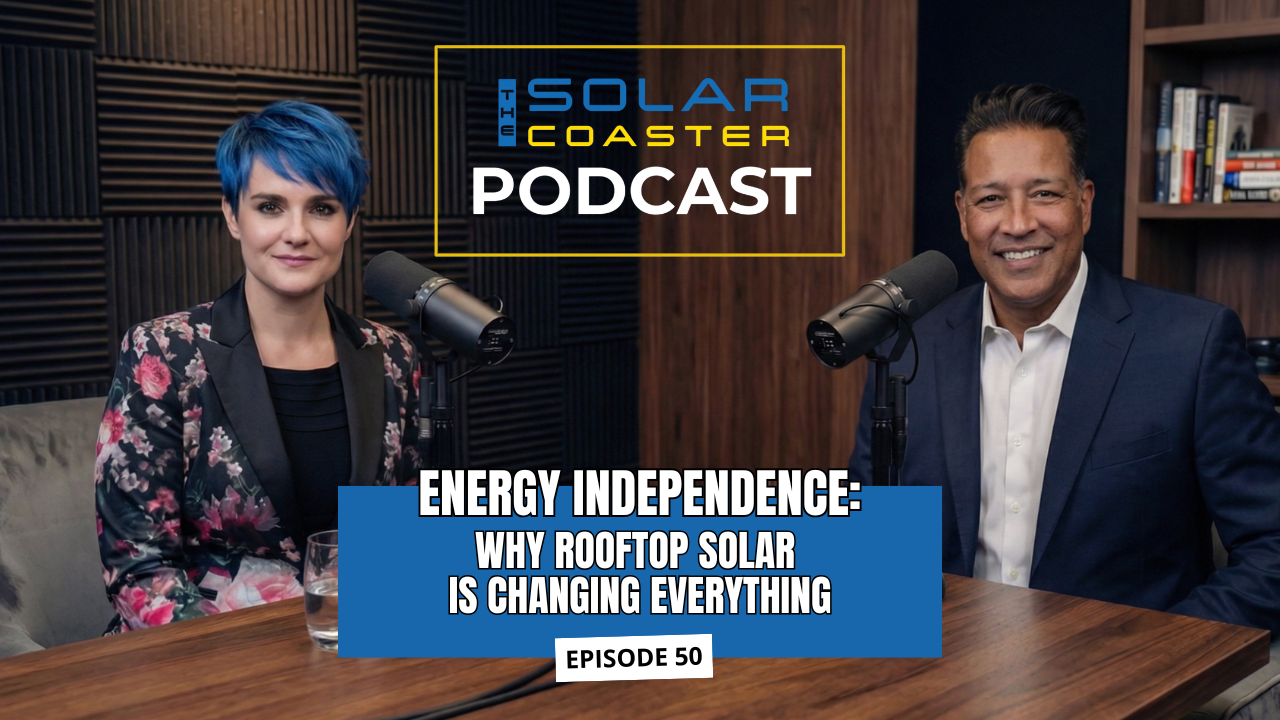
This episode is sponsored by Sun Energy Today, a commercial solar and storage developer focused on MW-scale infrastructure and long-term energy resilience.
🌐 https://sunenergytoday.com/
💼 https://www.linkedin.com/in/atzael-herrera/
Listen to the Full Episode
🎧 Spotify: https://open.spotify.com/show/28LLOtNEQj8ZoCZJqVOa7o
🎧 Apple Podcasts: https://podcasts.apple.com/us/podcast/the-solar-coaster-podcast/id1832579656
🎧 Amazon Music: https://music.amazon.com/podcasts/342b84c9-ccb9-4cdb-99cc-ed6254503bfa/the-solar-coaster-podcast
🎧 iHeart Radio: https://iheart.com/podcast/292376116/
📺 YouTube: https://www.youtube.com/@solarcoasterbook
⚠️ AI Transparency Notice: This episode uses AI-generated voice technology based on the real voices of Anna Covert and Alex Herrera. Both individuals have provided full knowledge and consent for their voices and likenesses to be used in this AI-produced episode. The insights shared reflect their real-world experience and professional viewpoints. This episode is clearly labeled as AI-assisted and is not intended to mislead viewers regarding identity or authorship.
How Smarter State Energy Rules Could Lower Power Costs and Accelerate Solar
In this Sun Energy Today discussion, Anna Covert and Alex Herrera explain how state-level reforms involving utility planning, permitting, solar interconnection, battery storage, Virtual Power Plants and modern grid technology could help meet rising electricity demand while protecting customers from unnecessary costs.
Anna Covert: Imagine running a massive digital empire—artificial intelligence models training around the clock, massive server farms humming 24/7, and electric vehicles plugging into the grid by the millions. All of this requires a staggering amount of electricity. The knee-jerk reaction from a lot of legacy utilities is to say, "Well, we need to build more fossil fuel plants fast, and it's going to cost consumers a fortune." But what if that whole premise is completely wrong? What if clean energy is actually the cheapest, fastest way to meet this historic surge in demand, provided we fix the outdated rules holding it back?
Alex Herrera: That is precisely the core message of a major report released by the think tank Energy Innovation. They laid out twenty concrete policy strategies that state leaders—whether we're talking about governors, state legislatures, or public utility commissions—can deploy right now. The big takeaway is that we don't need to wait for some miraculous future technology to secure affordable, clean power. The tools already exist, but our regulatory systems are still operating like it's 1995.
Anna Covert: It's fascinating because when people think about the energy transition, they usually picture giant wind turbines or high-tech solar farms. They rarely think about utility integrated resource plans or state permitting laws. Yet, those invisible administrative mechanics are where the real war for cheap energy is being fought.
Alex Herrera: Absolutely. If you look at what's driving electricity demand right now, it's not just gradual population growth. It's an exponential spike driven by data centers, industrial electrification, and electric transport. Energy Innovation's analysis proves that meeting this new load with renewables paired with storage isn't just an environmental choice—it's a cost-saving imperative. But to unlock those savings, states have to remove the institutional friction points.
Anna Covert: Let's break down those friction points. One area that immediately jumps out in the report is system planning and how utilities forecast costs. How are traditional utilities getting this wrong, and what is Energy Innovation proposing instead?
Alex Herrera: In many states, when a utility drafts its long-term plan—what's known as an Integrated Resource Plan—they use outdated, inflated cost assumptions for renewables while underestimating the volatility of fossil fuels like natural gas. Then, if gas prices spike, who pays for it? The customers do, through fuel adjustment clauses on their monthly bills. Energy Innovation suggests a brilliant structural shift: if fuel costs skyrocket above predictions, the utility itself should absorb a portion of that cost through reduced profits, rather than passing 100 percent of the risk onto captive ratepayers.
Anna Covert: That completely shifts the financial incentive. If a utility's bottom line is on the line when natural gas prices fluctuate, they're going to be a lot more motivated to procure clean energy that has zero fuel cost risk.
Alex Herrera: Exactly. It aligns corporate profit with consumer interest. Another huge innovation in system planning involves competitive, all-source procurements. Look at Colorado. Instead of a utility saying, "We want to build a specific gas plant," they open up a bid where wind, solar, batteries, demand response, and gas all compete on a level playing field. Time and time again, when you let resources compete openly, clean energy packages win on price.
Anna Covert: That makes total sense for open wholesale markets. But what about states where corporate giants—like tech companies building massive data centers—want 100 percent clean power, but they operate in traditional, monopoly utility territories where bilateral corporate Power Purchase Agreements aren't legally allowed?
Alex Herrera: That has been a massive headache for tech companies trying to hit zero-carbon goals. The report highlights a fresh workaround called a Clean Transition Tariff. Nevada pushed this forward through a deal between Google and NV Energy. Essentially, it creates a specialized rate structure allowing large commercial customers to directly underwrite and receive power from new clean energy projects built specifically for them, without shifting costs onto everyday residential customers or violating local utility structures. It's a win-win that allows big tech to bring its own clean power to the table.
Anna Covert: That's a clever policy hack. But even if you have the right planning and tariffs, you eventually have to actually build these projects. And that brings us to what might be the single biggest bottleneck in the country right now: permitting and local zoning.
Alex Herrera: It's a massive hurdle. The report notes an alarming trend: roughly 24 percent of all U.S. counties now have some form of restriction or outright ban on utility-scale solar or wind development. Think about that—nearly a quarter of the country is putting up regulatory stop signs.
Anna Covert: A quarter of all counties is an astounding number. How can state governments step in without completely steamrolling local communities?
Alex Herrera: It's a delicate balance, but several states are establishing clear statewide permitting standards. Instead of letting every tiny jurisdiction create arbitrary, hyper-restrictive setbacks or bans that kill projects, states can create standardized, predictable environmental and siting reviews. This gives developers a clear timeline while still ensuring real environmental protections and community benefit agreements. If a project meets high, standardized criteria, local political whim can't just kill it indefinitely.
Anna Covert: Beyond land permits, there's also the physical grid itself. We keep hearing about the "interconnection queue"—thousands of clean energy projects sitting in line for years, just waiting for permission to plug into the transmission network. Is there a way to speed that up without spending billions on new transmission lines that take a decade to build?
Alex Herrera: Yes, and this is where grid utilization strategies get really exciting. Energy Innovation points out that we are wildly underutilizing the wire infrastructure we already have. States like Indiana, Maryland, and Virginia are leading the charge by requiring utilities to look at "surplus interconnection."
Anna Covert: What does surplus interconnection look like in practice?
Alex Herrera: Picture a power plant that only uses its grid connection at full capacity 40 or 50 percent of the time—like a solar farm that doesn't produce at night, or an old thermal plant that's being dialed down. Instead of building a brand-new transmission line for a new project, you allow a secondary generator, like a solar array or a battery storage system, to plug into that exact same point of connection. You're essentially carpooling on the electrical grid.
Anna Covert: That's such an obvious fix. It's like letting a delivery truck use an empty lane during off-peak hours instead of building a whole new highway lane.
Alex Herrera: Precisely. And on top of that, there are advanced transmission technologies—often called reconductoring. You keep the existing steel towers, but you swap out the old saggy copper or steel cables with modern high-performance composite core conductors. You can literally double or triple the power capacity of an existing corridor in a fraction of the time and at a fraction of the cost of building new infrastructure.
Anna Covert: It sounds like a no-brainer, so why aren't all utilities doing this automatically?
Alex Herrera: Because of traditional utility business models. Historically, utilities make their profit by spending large amounts of capital on massive, expensive new infrastructure assets. Spending less money to optimize existing lines through clever software or advanced conductors doesn't yield the same guaranteed financial return under legacy rate structures. That's why state regulators have to step in and explicitly mandate these operational evaluations.
Anna Covert: That really highlights why state policy is the key that unlocks everything else. But let me push back a bit or look at the full picture. The Energy Innovation report focuses heavily on large-scale utility strategies and policy frameworks. But what about small-scale, distributed energy—like residential rooftop solar and home batteries? Does the report cover that sufficiently?
Alex Herrera: That's actually a major point of discussion among industry experts. While the Energy Innovation report touches on distributed resources—praising integrated distribution planning, virtual power plants, and automated rooftop permitting—some advocates argue it overlooks crucial micro-level strategies.
Anna Covert: Like what? What did they leave out?
Alex Herrera: If you look at recommendations from organizations like the Interstate Renewable Energy Council, or the Department of Energy's Distributed Energy Resource Interconnection Roadmap, they point to very specific technical standards. For example, requiring smart inverters on all rooftop solar systems, publishing accurate grid hosting capacity maps so installers know exactly where the grid has spare capacity, and establishing standardized baseline interconnection rules.
Anna Covert: Why are hosting capacity maps and smart inverters so crucial? Can you translate that into plain terms?
Alex Herrera: Think of hosting capacity maps as a real-time GPS for the electrical grid. If a solar installer wants to put solar on a commercial roof, right now they often have to submit an application and wait months just to find out if the local circuit can handle the power. A hosting capacity map shows everyone online: "Green zone here, feel free to plug in; red zone there, grid is congested." It eliminates guesswork. And smart inverters act like intelligent traffic controllers on the rooftop solar system itself, automatically adjusting voltage so the local grid stays stable without requiring expensive utility transformer upgrades.
Anna Covert: So while Energy Innovation provides a macro-policy playbook for large-scale utility reform and state legislation, frameworks like the IREC roadmap provide the micro-level engineering and consumer-facing policies. You really need both working in tandem to build a resilient, low-cost system.
Alex Herrera: Exactly. You can't ignore the macro-utility level because that's where the massive gigawatts for data centers will come from, but you also can't ignore the distributed edge, because Virtual Power Plants—aggregating thousands of home batteries and smart thermostats—can shave off peak demand spikes at a microscopic cost compared to building new peaking power plants.
Anna Covert: Let's talk more about Virtual Power Plants, or VPPs. The concept sounds almost futuristic—thousands of homes working together like a giant power plant. How close are we to making VPPs a mainstream reality across the states?
Alex Herrera: We're much closer than most people realize, but it requires state policy to unlock the market. A VPP basically aggregates small energy assets—home batteries, smart water heaters, electric vehicle chargers—and connects them through smart software. When grid demand surges on a hot summer afternoon, instead of firing up a dirty, expensive gas peaker plant, the grid operator sends a signal to thousands of home batteries to discharge a little bit of power, or tells smart thermostats to adjust by one degree.
Anna Covert: And the homeowner gets compensated for contributing their stored energy or adjusting their usage.
Alex Herrera: Right. But for that to happen, state regulators must establish rules that allow these aggregated micro-resources to bid directly into wholesale or retail capacity markets. States like Massachusetts and California have shown that VPPs can deliver real grid reliability during extreme heatwaves. It's cheaper for the utility, profitable for the consumer, and cleaner for the environment.
Anna Covert: Another interesting element in the Energy Innovation report was the idea of developing clean energy on brownfields—industrial sites, former coal mines, or contaminated lands. But the report noted that this has been surprisingly challenging in places like New York State. Why is redeveloping brownfields for clean energy so difficult?
Alex Herrera: On paper, brownfield development sounds ideal. You're taking land that isn't suitable for housing or agriculture and installing solar arrays or battery banks. Plus, these sites often already have existing grid connections from old industrial operations. But in reality, environmental liability issues, complex cleanup standards, and lingering legal questions over who is responsible for historical contamination can stall projects in court for years. It requires states to pass specific liability shield laws and streamlined environmental reviews to give clean energy developers the confidence to invest in those sites.
Anna Covert: It really underscores that every single one of these policy solutions requires meticulous regulatory craft. It's not enough to just say "we want clean energy." You have to fix liability laws, reform utility profit models, mandate smart inverter settings, update permitting timelines, and modernize planning software.
Alex Herrera: That's the core takeaway. The energy transition isn't waiting on a secret technological breakthrough in a lab. Solar panel efficiency is already incredible; battery costs have plummeted over the last decade; wind turbines are more powerful than ever. The barrier is institutional inertia. We are trying to run a 21st-century digital economy on a regulatory framework designed for 20th-century centralized fossil fuel monopolies.
Anna Covert: So if you're a state legislator or a utility commissioner looking at the next decade—facing massive new power demands from artificial intelligence, data centers, and manufacturing—what is the first principle to keep in mind?
Alex Herrera: The first principle is that clean energy is no longer a luxury good or an expensive environmental compromise. It is the cheapest, most agile resource available. But to capture those cost savings, you have to actively reform the rules of the game. If you stick with the status quo, utilities will naturally default to what they know: building expensive, capital-intensive fossil fuel infrastructure, passing the cost and fuel-price volatility directly onto consumers, and slowing down the economy.
Anna Covert: And if states do adopt these 20 strategies—streamlining permits, unlocking surplus grid capacity, enabling clean transition tariffs, and opening up competitive bidding—what does the energy landscape look like ten years from now?
Alex Herrera: You get a grid that is dramatically more resilient, significantly cheaper to operate, and capable of absorbing massive new industrial demand without crushing consumers with sky-high utility bills. You create a dynamic ecosystem where big tech companies can power data centers with local clean energy, homeowners can earn revenue from their garage batteries, and utilities are rewarded for efficiency rather than wasteful spending.
Anna Covert: It leaves us with a compelling question for listeners and policymakers alike: As power demand surges for the first time in decades, will state leaders step up to modernize the rules, or will outdated regulations cost us hundreds of billions of dollars in missed opportunities? The choice isn't technical—it's political and regulatory.
Alex Herrera: Absolutely. The playbook is right there on the table. The states that act first will attract the industries, the jobs, and the lower power bills of the future, while those that wait will be left paying the price for old ways of thinking.