What Homeowners and Businesses Should Know About Solar Decommissioning
Solar energy is designed to last for decades.
That long lifespan is one of the reasons solar can be such a valuable investment for homeowners, businesses, and large energy users.
But like any long-term energy system, solar has a lifecycle.
Panels age. Equipment wears out. Batteries degrade. Technology improves. And eventually, every system reaches a point where it must be repaired, repowered, recycled, or removed.
At Sun Energy Today, we believe that responsible solar planning means thinking beyond installation day. A quality solar project should be designed not only for performance today, but also for long-term reliability, serviceability, and eventual end-of-life management.
What Is Solar Decommissioning?
Solar decommissioning is the process of safely removing solar equipment at the end of a project’s useful life.
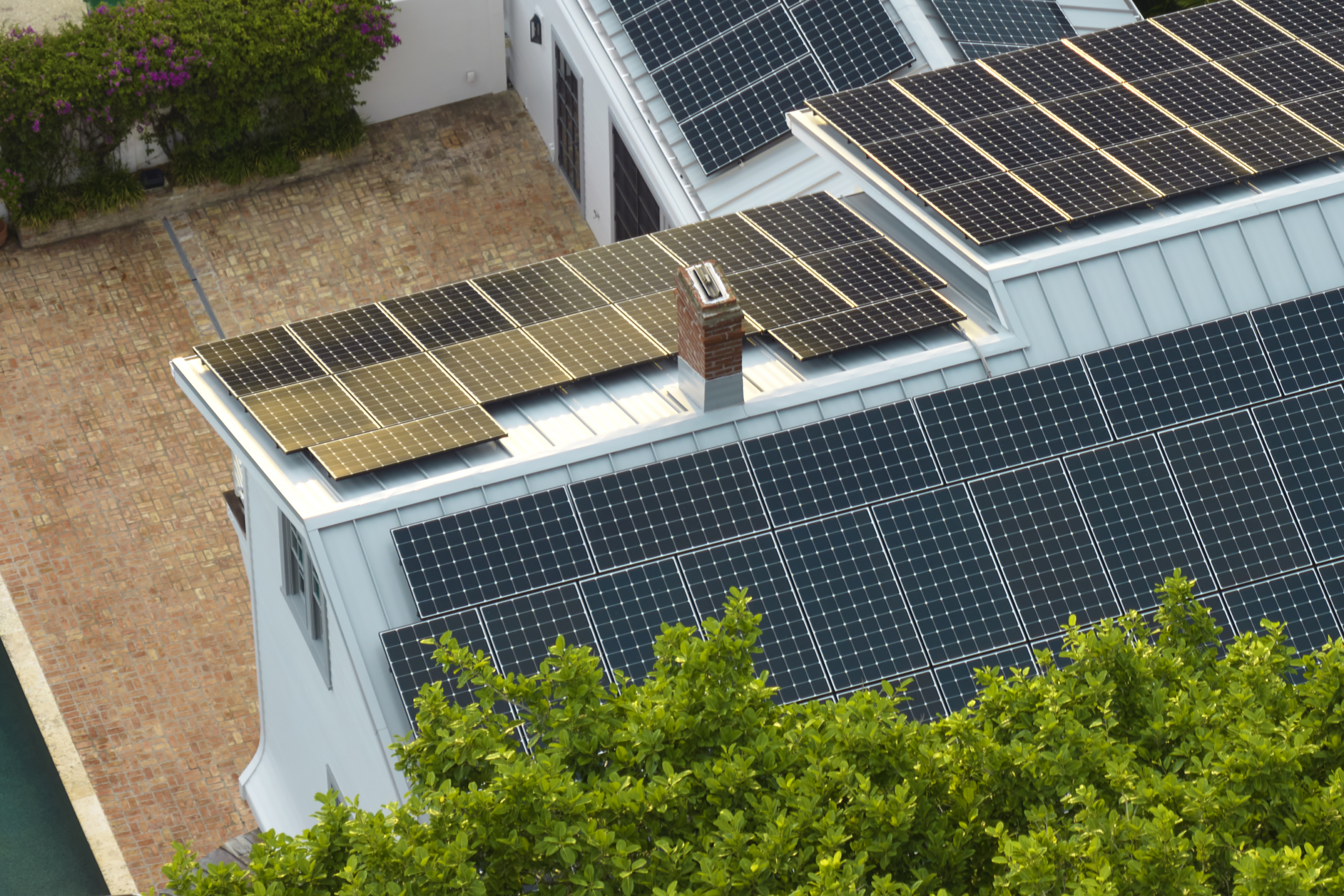
For a residential system, this may involve removing rooftop panels, racking, inverters, wiring, and related equipment.
For a commercial or utility-scale project, decommissioning can be far more involved. It may include removing thousands of panels, steel mounting systems, underground wiring, transformers, access roads, fencing, and battery storage systems.
For businesses evaluating commercial solar solutions, this is an important part of long-term planning. A solar project is not just a short-term construction project. It is an infrastructure investment that may operate for 25 to 30 years or more.
Why Decommissioning Matters
Responsible decommissioning protects property owners, communities, and the environment.
Without a clear end-of-life plan, old solar equipment could become a burden for landowners or local governments. This is especially important for large ground-mounted systems, agricultural land, and utility-scale solar projects.
Good decommissioning planning helps ensure that:
- Equipment is removed safely
- Reusable materials are recovered where possible
- Land is restored appropriately
- Battery systems are handled safely
- Future property use is protected
For larger energy projects, responsible planning should begin long before the system reaches retirement age.
Solar Is More Than Panels
When people think about solar, they usually think about panels.
But a solar energy system includes much more than that.
It may include racking, inverters, monitoring systems, wiring, electrical equipment, transformers, and batteries. Each of those components has its own lifespan and maintenance considerations.
This is why Sun Energy Today focuses on complete energy systems, not just panel installation. Through our solar technology solutions, we help customers understand how design, equipment quality, monitoring, and storage all affect long-term performance.
Battery Storage Adds Another Layer
Battery storage is becoming increasingly important for solar customers.
Batteries can provide backup power, improve energy flexibility, and help customers use more of the solar energy they generate.
However, batteries also require careful lifecycle planning.
Large-scale battery systems contain complex materials and must be handled properly at the end of their useful life. Recycling, fire safety, replacement planning, and system monitoring all matter.
This is especially important for businesses and larger facilities considering solar plus storage as part of a long-term energy strategy.
What Residential Customers Should Ask
Homeowners considering Arizona residential solar should ask questions that go beyond first-year savings.
Important questions include:
- What equipment is being installed?
- How long are the panels, inverters, and batteries expected to last?
- What warranties are included?
- Can the system be monitored over time?
- What happens if equipment needs to be replaced later?
- Can panels or batteries be recycled at end of life?
These questions help homeowners make better long-term decisions and avoid treating solar as a one-time purchase.
What Businesses Should Consider
Commercial solar customers should look at decommissioning as part of the full financial model.
A commercial system may involve roof conditions, structural requirements, equipment replacement timelines, tax planning, utility coordination, and long-term operations and maintenance.
For organizations comparing energy options, reviewing Sun Energy Today’s project experience can help show how different solar applications are planned and executed in real-world settings.
Businesses should also consider whether a system may be repowered instead of fully removed. In some cases, older equipment can be replaced with newer, more efficient technology while keeping portions of the original infrastructure in place.
Utility-Scale Solar Requires Careful Land Planning
Utility-scale solar projects require the most detailed decommissioning plans because they involve large areas of land and extensive infrastructure.
For landowners and developers, the end-of-life plan may include soil restoration, drainage repair, vegetation management, equipment removal, and recycling.
Organizations exploring utility-scale solar energy solutions should consider decommissioning as part of responsible project development from the very beginning.
Why Recycling Matters
Solar recycling is still growing as an industry.
Panels may contain valuable materials such as aluminum, glass, copper, silver, and silicon. Recovering those materials can reduce waste and support a more circular clean energy economy.
As more systems reach the end of their useful life in the coming decades, recycling infrastructure will become increasingly important.
Customers should work with solar providers who understand not only installation, but also long-term system responsibility.
Solar Is a Long-Term Relationship
The best solar projects are designed with the full lifecycle in mind.
That includes planning, installation, monitoring, maintenance, upgrades, and eventual equipment replacement or removal.
Solar should not be viewed as a set-it-and-forget-it product. It is long-term energy infrastructure.
Final Thought
Solar remains one of the most powerful tools for reducing energy costs, improving resilience, and supporting a cleaner energy future.
But true sustainability requires looking at the whole picture.
From installation to operation to eventual decommissioning, every stage matters.
If you are ready to explore a solar system built with long-term performance in mind, you can get started with Sun Energy Today and begin planning a system designed for today, tomorrow, and decades into the future.
If you are ready to explore solar for your home or business, you can get started with Sun Energy Today and begin planning a system designed for long-term performance.
Sponsored by Sun Energy Today
This episode is sponsored by Sun Energy Today, a commercial solar and storage developer focused on MW-scale infrastructure and long-term energy resilience.
🌐 https://sunenergytoday.com/
💼 https://www.linkedin.com/in/atzael-herrera/
Listen to the Full Episode
🎧 Spotify: https://open.spotify.com/show/28LLOtNEQj8ZoCZJqVOa7o
🎧 Apple Podcasts: https://podcasts.apple.com/us/podcast/the-solar-coaster-podcast/id1832579656
🎧 Amazon Music: https://music.amazon.com/podcasts/342b84c9-ccb9-4cdb-99cc-ed6254503bfa/the-solar-coaster-podcast
🎧 iHeart Radio: https://iheart.com/podcast/292376116/
📺 YouTube: https://www.youtube.com/@solarcoasterbook
⚠️ AI Transparency Notice: This episode uses AI-generated voice technology based on the real voices of Anna Covert and Alex Herrera. Both individuals have provided full knowledge and consent for their voices and likenesses to be used in this AI-produced episode. The insights shared reflect their real-world experience and professional viewpoints. This episode is clearly labeled as AI-assisted and is not intended to mislead viewers regarding identity or authorship.
The Solar Coaster Podcast Transcript
The Solar Afterlife: What Happens When Solar Farms Retire?
Anna Covert: Think about the last time you drove past a massive solar farm. Thousands of sleek, dark panels tilted toward the sky, silently soaking up the sun. It feels like the ultimate clean, permanent solution to our energy problems. But here is a question we rarely ask when we look at those glittering fields. What happens when those panels grow old and stop working?
Alex Herrera: It is the classic case of focusing so much on the grand opening that we completely forget about the closing act. Right now, we are in the middle of an absolute solar boom. In the last year alone, the United States added over 40 gigawatts of new solar capacity. That is a staggering number of panels, but these systems do not last forever. They have a lifespan, usually around 25 to 30 years. And because the major rush to build utility-scale solar started a decade or two ago, we are rapidly approaching the day when the first massive wave of these projects will reach the end of their operational lives.
Anna Covert: So we are essentially looking at a giant wave of retirement for green technology. When we talk about taking these projects down, what does that actually look like? Is it just a matter of unplugging the panels and hauling them away, or is it more complicated than that?
Alex Herrera: It is incredibly complex. Decommissioning a utility-scale solar farm is not just about unscrewing some panels. You have to dismantle massive steel racking systems, pull up miles of underground wiring, remove heavy concrete foundations, clear out inverters, transformers, and security fencing. And then there is the land itself. You have to restore the soil, grade the ground, replant native vegetation, and sometimes repair drainage systems that were altered during construction. If there is battery storage on site, which is increasingly common, you also have to safely decommission large-scale chemical batteries. It is a massive industrial cleanup project.
Anna Covert: And I imagine that cleanup comes with a very hefty price tag. Which brings up the trillion-dollar question: who is actually responsible for paying for all of this? If a solar company goes out of business in 25 years, does the local community get stuck with a field of decaying metal and glass?
Alex Herrera: That is exactly the anxiety driving a quiet revolution in state capitals across the country. Landowners and local governments are realizing they need guarantees. A recent report looking at the state of solar decommissioning found that policymakers are scrambling to write the rules of the road before these projects start reaching retirement age. The big issue is that there is no single unified national standard. The federal government is not regulating this. The industry itself is trying to draft some voluntary guidelines, but right now it is a massive patchwork of state and local laws.
Anna Covert: A patchwork that sounds like a nightmare for developers who are trying to build projects across multiple states. How different are we talking?
Alex Herrera: Extremely different. Some states have strict top-down rules. Some leave it entirely to local counties, and others have almost nothing on the books yet. According to the data, nearly half the states in the country now have statewide policies, while others use a hybrid model where the state sets a baseline but local governments handle the details. In the last year alone, more than two dozen state legislatures debated or passed laws specifically targeting things like decommissioning plans, financial security, and recycling.
Anna Covert: Let us break down how this actually works in practice. If a state wants to protect its citizens and its land, what is the primary tool they use?
Alex Herrera: The absolute backbone of modern decommissioning policy is something called financial assurance. Think of it like a massive security deposit. Before a developer even breaks ground on a project, the state or local government requires them to secure a bond, a letter of credit, or put money into an escrow account. This money is earmarked specifically for decommissioning. If the developer walks away or goes bankrupt decades from now, the government can cash that bond and use the funds to clean up the site.
Anna Covert: That makes total sense. It shifts the risk away from the taxpayer and onto the developer. But how do you calculate the cost of cleaning up a site 30 years in the future? Inflation, changing labor costs, the fluctuating value of salvaged metals? It seems like a moving target.
Alex Herrera: It is a moving target, and that is why the best policies do not just set a number and forget it. For example, California, which is the biggest solar market in the country, uses a hybrid system where developers have to submit detailed decommissioning plans to local governments. But those plans have to be reviewed and approved by state conservation officials. Crucially, they require the financial estimates to be updated every five years. That way, if the cost of recycling panels goes up or if labor costs spike, the security deposit is adjusted to match reality.
Anna Covert: California is always an interesting case study because of its size. But what about a state like Texas? They have a massive amount of solar, but a very different political and regulatory philosophy. How are they handling it?
Alex Herrera: Texas takes a very landowner-centric approach, specifically for private non-utility land. Their laws focus on protecting the farmers and ranchers who lease their land to solar developers. In Texas, the law outlines exactly what must be done to restore the land, including removing all equipment, restoring the soil, and reseeding the ground so it can be used for agriculture or grazing again. They also recently passed laws specifically targeting the recycling of solar components and how battery storage facilities must be decommissioned. It is about protecting the private property owner's legacy.
Anna Covert: It is fascinating to see how the local economy shapes these laws. You mentioned restoring land for agriculture, which makes me think of the Midwest. I would imagine states with highly productive farmland are very protective of their soil.
Alex Herrera: Absolutely. Take Illinois, for example. Their decommissioning policy is almost entirely driven by the desire to protect prime agricultural land. And if you want to build a solar project over a certain size on agricultural land in Illinois, you have to sign what is called an agricultural impact mitigation agreement. You cannot just promise to haul away the panels. You have to prove you will protect the topsoil, preserve the agricultural drainage systems, and return the land to a state where it can actually grow crops. Again, it is a recognition that food security and energy security have to coexist on the same acres.
Anna Covert: That is a really important point. We often talk about solar as this clean, footprint-free technology, but it does take up a lot of space, and often that space is prime farmland. If we ruin the soil during the construction and operation phase, then the green transition has a hidden, very dark cost.
Alex Herrera: Exactly. And that is why these decommissioning plans are focusing so much on soil management. It is not just about the hardware, it is about the Earth beneath the hardware. But then you look at other states like Florida or Arizona, which are also massive solar markets, and the regulatory landscape is completely different. Florida, for instance, had bills introduced recently that would have allowed counties to require decommissioning bonds for solar projects on agricultural land, but those bills failed to pass. So in those states, the rules are much more fragmented, relying heavily on local zoning boards or individual lease negotiations between developers and landowners.
Anna Covert: Why do you think some states are hesitant to pass these laws? Is there a fear that strict decommissioning rules will scare away developers and slow down the transition to clean energy?
Alex Herrera: That is definitely the tension. Developers argue that if you make the financial assurance requirements too high, or if you require them to tie up millions of dollars in bonds on day one, it makes projects financially unviable. They argue it slows down the deployment of clean energy at a time when we urgently need to reduce emissions. So policymakers are walking a tightrope. They want to protect their communities from being left with a mess, but they do not want to create so much red tape that they kill the local solar industry.
Anna Covert: It seems like a classic regulatory balancing act, but there is another element here that we touched on briefly, and that is battery storage. More and more solar projects are being built with massive battery systems attached, so they can store power and feed it to the grid when the sun goes down. How does that change the decommissioning math?
Alex Herrera: It complicates things significantly. A solar panel is mostly glass, aluminum, and silicon. It is relatively stable. A utility-scale lithium-ion battery system is a different beast entirely. It contains hazardous materials, presents potential fire risks, and requires highly specialized handling to dismantle and recycle. Some states, like North Carolina and New York, are actively integrating battery storage into their solar decommissioning frameworks. In New York, if you build a project over a certain size, your decommissioning plan must specifically address the safety, recycling, and disposal of the battery systems. You cannot just treat them as an afterthought.
Anna Covert: And what about recycling in general? When we take down millions of panels, where do they go? Do they end up in landfills, or is there a viable recycling industry ready to handle this?
Alex Herrera: Right now, the recycling infrastructure is still in its infancy. It is often cheaper for a company to throw old panels into a landfill than it is to transport them to a specialized recycling facility and extract the valuable materials like silver, copper, and high-purity silicon. But landfilling these materials is a massive waste of resources and presents its own environmental risks. Some states are starting to pass disposal bans or reporting requirements to force the industry's hand. Texas, as I mentioned, has started addressing this, and other states are looking at producer responsibility laws where the manufacturers would be responsible for taking the panels back at the end of their life.
Anna Covert: It feels like we are looking at a preview of the next big environmental challenge. We spent the last two decades figuring out how to build solar as fast as possible. Now we have to figure out how to dismantle it just as efficiently.
Alex Herrera: It is a shift from a linear mindset to a circular one. For a long time, the green energy movement was focused entirely on generation. How many megawatts can we get online today? But a truly sustainable energy system has to account for the entire lifecycle. We have to design these systems with their demise in mind. How do we build a panel so it is easier to recycle in 30 years? How do we lease land in a way that respects the next generation of farmers?
Anna Covert: It is a philosophical question as much as a regulatory one. If we do not get this right, we risk trading one environmental liability for another. Instead of carbon emissions, we could end up with millions of tons of electronic waste scattered across rural communities.
Alex Herrera: And that would be a tragic irony. The good news is that by addressing this now, decades before the bulk of these projects retire, we have a chance to get ahead of the curve. The Dzire report shows that states are recognizing this. They are serving as laboratories of policy, experimenting with different models, whether it is California's conservation-heavy approach, Illinois's focus on farmland, or Texas's emphasis on landowner rights. Eventually, these state-level experiments will likely coalesce into a standard way of doing business or even a national framework.
Anna Covert: Let us hope so. It seems clear that the future of solar energy isn't just about what happens when the sun is shining. It is equally about what we do when the lights finally go out on these projects. It is about closing the loop.
Alex Herrera: Exactly. True sustainability means looking at the whole picture from the first shovel in the ground to the final restoration of the soil. Only then can we truly call this energy clean.